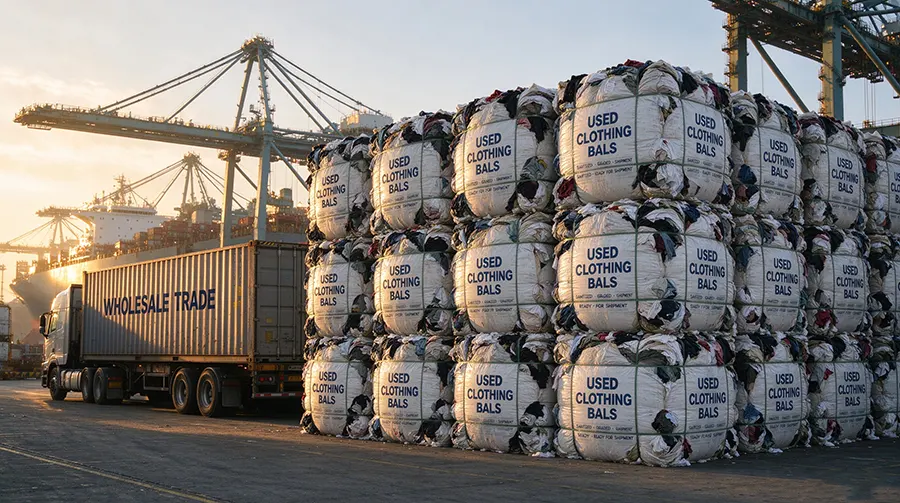
The global used clothing export sector has undergone profound structural transformation over the past decade. Once treated as a low-threshold, informal bulk commodity trade, it is now evolving into a standardized circular textile industry with clear grading rules, cross-border compliance systems and digital B2B sales channels. China has grown into the world’s second-largest exporter of used clothing, occupying 13.1% of global market share. Africa remains the core import region, accounting for roughly 55% of total global import volume. Meanwhile, Latin America and parts of Southeast Asia emerge as high-growth emerging markets. Industry analysts believe the sector is entering a phase of quality-driven competition, where sorting capability, compliance certification and digital customer development decide long-term survival, rather than simple supply volume.

Market scale and regional pattern: Africa as core demand, Latin America growing rapidly
The global second-hand apparel market maintains steady expansion. Industry forecasts estimate the whole market will reach USD 485.97 billion by 2031, with a compound annual growth rate of 16.08%. Africa is still the largest destination for used clothing bales; Nigeria, Kenya and Ghana are the top buyers. In recent years, Latin America has become a fast-growing new market, where Spanish-language wholesale inquiries surge and demand for women’s casual used garments rises sharply. Some Southeast Asian countries impose strict import bans, while others maintain stable demand for low-cost second-hand apparel and textile recycling materials. The market is no longer one single homogeneous market; buyers in different regions require distinct grade mixes, such as lightweight summer clothes for West Africa and thick winter outerwear for Eastern Europe.
Industry upgrading: shifting from mixed waste bales to graded, categorized supply
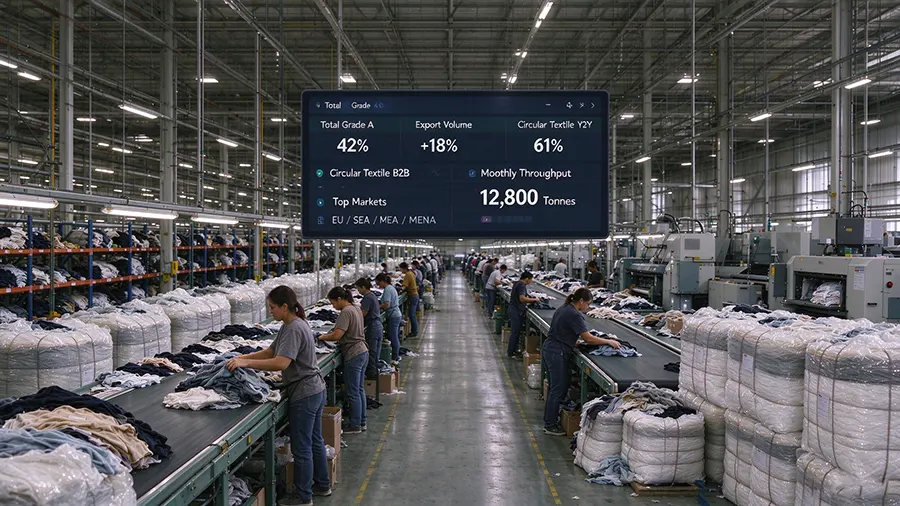
In the early stage of used clothing export, most shipments were unsorted mixed bundles with unstable impurity ratios, leading to frequent customs disputes and buyer complaints. The industry has gradually moved toward fine sorting. Leading suppliers adopt AI-assisted grading systems that can process thousands of pieces per hour and divide garments into Grade A, Grade B and Grade C, plus more than 200 subcategories according to fabric, season, gender and brand. Grade A near-new garments can command a 40%–60% premium over Grade C low-quality bales. Buyers now prioritize stable quality and clear composition ratios over low prices. Standardized sorting has become the core competitiveness of Chinese exporters.
Regulatory tightening: cross-border compliance becomes the biggest threshold
As circular economy and waste management rules strengthen globally, the used clothing trade faces rising regulatory pressure. Many African nations introduce pre-shipment inspection certificates, environmental taxes and prohibited item lists; second-hand underwear, medical protective clothing and heavily contaminated textiles are banned from import. The biggest risk is solid waste identification. Customs of exporting and importing countries will inspect whether goods are reusable wearable products or solid waste. The EU textile waste regulation will take effect in 2027, requiring traceability documents for textile shipments. Suppliers without complete certification and traceability records will face shipment detention, rejection and heavy fines. Compliance has changed from an optional extra to a necessary entry ticket for cross-border trade.
Digital transformation: B2B independent sites and social media reshape buyer sourcing paths
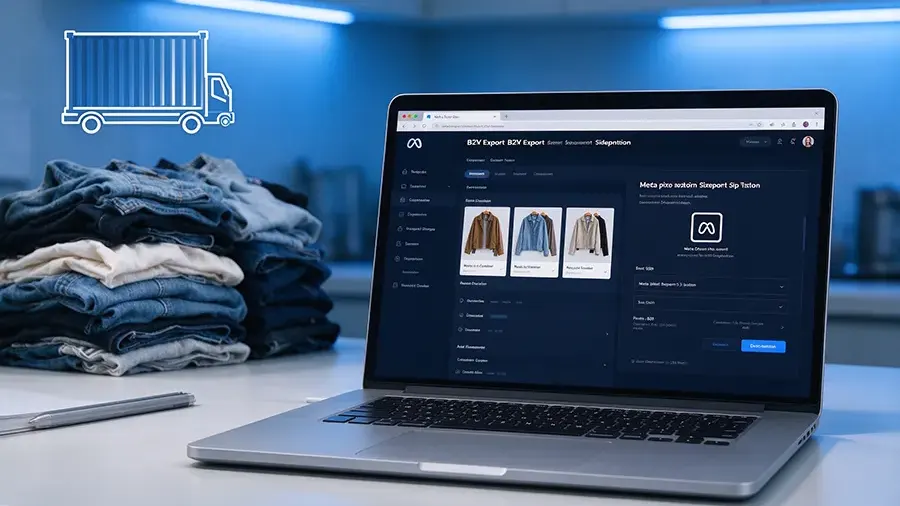
Traditional used clothing trade relied heavily on offline exhibitions and intermediary referrals. Today overseas wholesalers increasingly source suppliers through Google search, B2B independent websites and social platforms. B2B independent sites display sorting workshops, grading standards, container cases and certification documents, serving as the primary inspection window for international buyers. TikTok and Facebook also become channels for showing sorting, compressing and loading processes to attract overseas wholesalers. Digitalization shortens the distance between Chinese factories and end buyers, cuts intermediate links, and helps suppliers develop multi-language SEO and private-domain email nurturing to maintain repeat container orders.
Industry viewpoint: The future belongs to standardized, compliant and digitally capable suppliers
Circular textile trade observers point out that the era of winning purely by low price and large volume has ended. The used clothing export industry will continue to grow, but market competition will be concentrated on three core capabilities: refined sorting & quality control, full-set cross-border compliance documents, and digital B2B customer operation. Small traders with unstable sorting quality and incomplete certificates will gradually be eliminated. Enterprises that build standardized sorting lines, complete certification systems and multi-language independent stations can capture long-term stable wholesale clients from Africa, Latin America and French-speaking regions. The used clothing trade is moving from a simple second-hand goods export business into an important component of the global circular fashion economy.
Brief News: Blockchain traceability solutions start to be applied in used clothing export, recording collection, sorting, inspection and shipment information. It helps suppliers prove goods are reusable textiles and reduce the risk of being identified as solid waste by customs.