China’s recycling and export trade of second-hand textiles operates steadily. Supported by a mature sorting and recycling system, Chinese used garments are continuously exported to Africa, Southeast Asia and Latin America, making China a key supplier in the global circular textile trade. While the sector expands, it faces multiple challenges including tighter import regulations, quality control and environmental compliance. The whole industry is accelerating transformation toward standardization and digitalization.
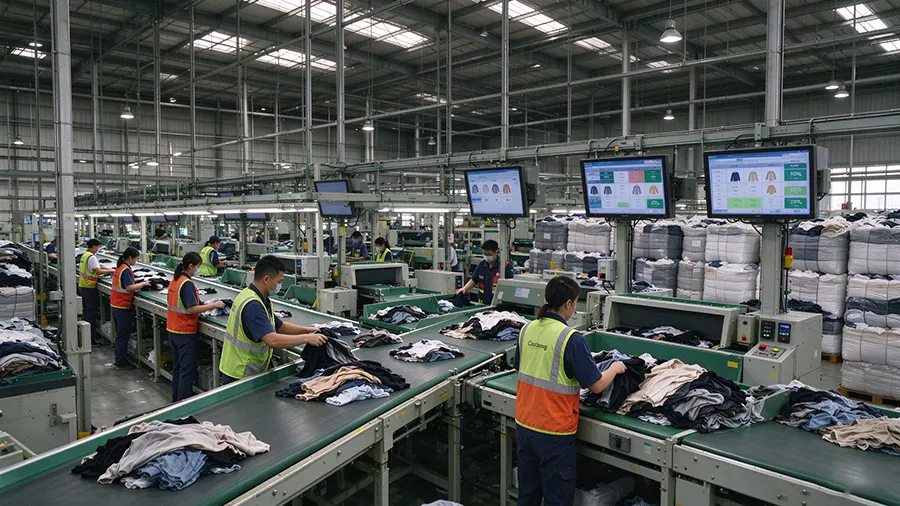
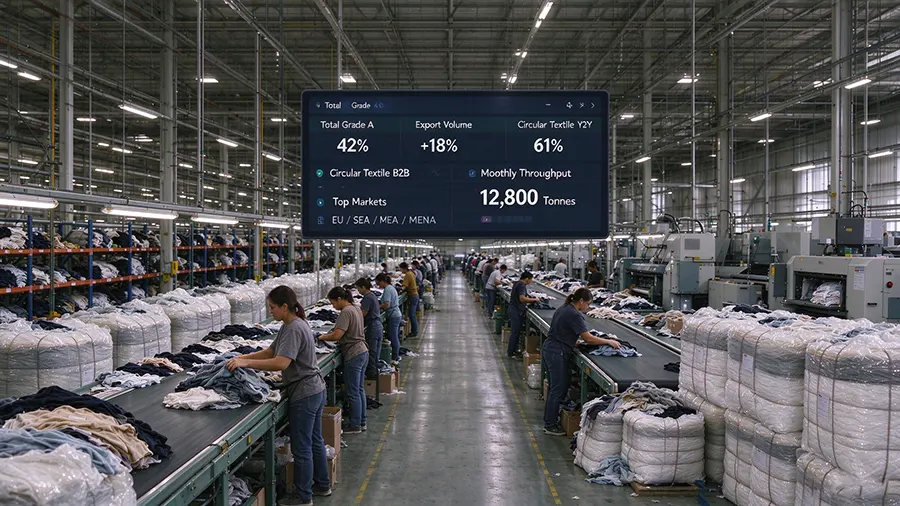
Massive waste textiles are generated in China each year. Residents’ idle clothes are collected via community recycling bins and online door-to-door collection services, then delivered to sorting plants. Garments are graded by fabric, style and condition, cleaned, disinfected and compressed into bales. Products are categorized into Grade A premium wearable clothes, mixed used apparel and textile scraps for recycling, then shipped in containers to overseas destinations.
Africa remains the largest import region for second-hand clothing. Markets in Nigeria, Kenya and Ghana show strong demand, and affordable, durable Chinese used garments are popular among local consumers. Southeast Asia and Latin America keep growing, with rising orders for well-sorted premium used clothing. After arriving at local wholesale markets, these garments are sorted and retailed by local vendors, supporting huge local employment in second-hand apparel distribution.
Industry practitioners point out that used clothing exports deliver both economic value and carbon reduction benefits, cutting landfill and incineration of textile waste as a vital part of textile circular economy. Nevertheless, market uncertainties persist. Some countries have imposed import restrictions on second-hand garments to protect domestic textile industries and manage solid waste pollution. Overseas buyers raise stricter requirements on batch consistency, sanitary inspection and packaging. Traditional rough sorting can hardly meet long-term overseas orders.
Leading recycling and export enterprises are adopting AI visual sorting equipment to improve grading efficiency, establishing batch traceability records and optimizing customs declaration, quarantine and logistics management. Industry insiders agree that future used clothing exports cannot rely merely on low-price bulk sales. Companies must strengthen quality control and compliance, distinguish reusable wearable clothes from unusable textile scraps, avoid solid waste export risks and advance sustainable development of the sector.
Global used clothing trade continues to expand in 2026. China’s used clothing exports target Africa as the core market, with rising new demand in Southeast Asia and Latin America. Multiple countries tighten import supervision. Domestic firms speed up digital sorting and compliance system construction, shifting the industry from extensive trading to high-quality circular economy.